Dave Manuel Logo
Saturday, February 04, 2012
Click Here to Subscribe to My Free Newsletter

DaveManuel.com BLOG POSTS
FRONT PAGE
FUND REPORT
INSIDER FILINGS
TRANSACTIONS
STOCK QUOTES
SPECIAL FEATURES
PROFILES
FUND HOLDINGS
NEWSLETTERS
INTERNATIONAL
MAGAZINES
REFINANCING
TRADING ACADEMY
TWITTER ALERTS
ARTICLE ARCHIVE
BLOG POSTS
DICTIONARY
U.S. DEBT CLOCK
SUPERPAC SPENDING
U.S. UNEMPLOYMENT
ANSWERS
INFOGRAPHICS
PERSONAL FINANCE
REVIEWS
NEWSLETTER
CONTACT ME
ADVERTISE
ARTICLE FEED
BLOG FEED


2010-03-25 07:50:00

DJIA Has Returned Average of 13.42% In Years With $400 Billion+ Inflation-Adjusted Deficits Since 1940
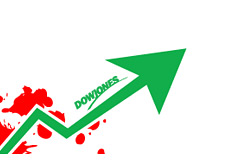


-- Dow Jones Industrial - DJIA - Rising during red ink deficit times -- Since 1940, the United States has posted a total of 12 deficits that were larger than $400 billion (in inflation-adjusted dollars):

2009 - $1.4 trillion
2008 - $455 billion
2004 - $463 billion
2003 - $430 billion
1992 - $439 billion
1991 - $420 billion
1986 - $429 billion
1985 - $418 billion
1983 - $442 billion
1945 - $561 billion
1944 - $574 billion
1943 - $670 billion

It may (or may not) surprise you to know that the Dow Jones Industrial Average has performed remarkably well during these twelve years.

As a matter of fact, in only one of these years (2008) did the DJIA actually close in the red for the year.

The average return for the DJIA over these twelve years in which the United States posted an inflation-adjusted deficit of at least $400 billion?

13.42%.

Here is a breakdown:

Year - Deficit - DJIA Return

2009 - $1.4 trillion, +18.82%
2008 - $455 billion, -33.84%
2004 - $463 billion, +3.15%
2003 - $430 billion, +25.32%
1992 - $439 billion, +4.17%
1991 - $420 billion, +20.32%
1986 - $429 billion, +22.58%
1985 - $418 billion, +27.66%
1983 - $442 billion, +20.27%
1945 - $561 billion, +26.97%
1944 - $574 billion, +11.8%
1943 - $670 billion, +13.81%

So what's going on here? Why would the markets perform so well in years when there was so much red ink?

Let's start with the '40s.

When the United States entered WWII, the US war machine revved up, which resulted in the economy finally shaking off its post Great Depression malaise. Unemployment rates fell through the floor, and people were generally starting to feel more confident about the future of the US economy for the first time in over a decade. The Great Depression didn't really end until the United States entered World War II. Entry into this war ushered in a new era of prosperity for the US that lasted for many decades.

Fast forward to the early '80s. The US economy was suffering greatly due to stagflation (high inflation coupled with weak economic activity). Multiple oil shocks had sent shockwaves through the US economy, and Ronald Reagan was dealt the task of trying to revive a fragile economy. "Reaganomics" was introduced to the world, and despite the United States posting a string of massive (well, massive at the time) deficits, unemployment numbers started to trend lower and Americans started to feel much more confident about their prospects. Americans bought into the "It's morning again in America" mantra, which resulted in Ronald Reagan easily gaining a second term. Markets also shot higher despite all of the government's red ink.

The early 90's. The United States entered into a recession in July of 1990, thanks in large part to the Gulf War and growing consumer pessimism. The recession ended in March of 1991, however, and marked the beginning of an unprecedented 10 years of vibrant economic activity in the United States. The Gulf War was a short one, and despite hundreds of billions of dollars in red ink, Americans quickly regained confidence in their economy.

2003-2004. Two expensive wars conspired to help wipe out the surpluses that the nation had enjoyed just a few years earlier. However, Americans were enjoying one of the great bubbles of all time (real estate) and were awash in cash and cheap credit. 2003 was a particularly good year for the markets, and Americans were spending at an unprecedented clip.

2008-2009. 2008 was the only year where the markets actually traded lower, and this was due to the near-collapse of the economy in the fall of 2008. The real estate bubble had popped, unemployment rates were trending higher, consumers were having to scale back on their purchases due to tightening credit and the US government was forced to spend an unbelievable amount of money to keep the financial system afloat. 2009 wasn't really a bounce back year for the US economy, as unemployment rates continued to trend higher. A more accurate description might be - dead-cat bounce.

--

The worst years for the markets are those in which investors start to realize that the economy is tipping into a recession. For instance, 2000 was not a good year for the markets, despite the fact that the US managed to post a sizable surplus. The markets sold off because people came to the realization that the country was likely in for some leaner times due to the popping of the dot-com bubble.

Source: History of Deficits and Surpluses in the U.S.


Filed under: The Economic Meltdown


COMMENTS - What Say You?


Related Articles
Map of Japan with the flag over-imposed
Posted on: 2012-01-31 03:22:00
The Ticking Japanese Time Bomb
2012 State of the Union logo
Posted on: 2012-01-25 01:32:00
Parsing Barack Obama's 2012 State of the Union Address
Bureau of Public Debt logo
Posted on: 2012-01-19 14:32:00
Record $3.28 Million Donated to Help Reduce US Debt Last Year
Brazil Flag - Illustration
Posted on: 2011-12-27 18:12:00
Brazil Passes UK To Become World's Sixth Largest Economy
Gallup Satisfaction in the U.S. Survey
Posted on: 2011-12-23 15:54:00
Gallup: US Satisfaction Near 30 Year Low


REVIEWS OF TOP ONLINE FOREX BROKERS

EtoroVisit
ForexyardVisit
QuestradeVisit


Twitter

321


Dow Jones12862.23156.821.22%
Nasdaq2905.6645.981.58%
S&P 5001344.919.361.44%

The Manuel Fund Report Q3 Manuel
Fund Report

SPECIAL FEATURES

Debt Ceiling Changes (1940-Present)

United States Debt Clock

Most Recent Insider Filings

Where Did The DJIA/NASDAQ/S&P 500 Trade On..

Historical GDP Numbers for the United States

Recent SEC Hedge Fund Filings

US Government Spending Breakdown 1962-2015

House of Representatives Majority History

History of Deficits and Surpluses in the U.S.

History of Debt In The United States

Largest Foreign Holders of US Debt

Inflation Calculator

Historical Unemployment Rates in the United States

Historical State Unemployment Rates

Canada Debt Clock

A History of Bank Failures in the United States

Mortgage Refinancing Calculator

Dow Jones Historical Data

Nasdaq Historical Data

S&P 500 Historical Data

Finance Tweets

Median Household Income History

List of Failed US Banks 2000-Present


BLOG POSTINGS

Weekly SuperPAC Update: Restore Our Future, Inc. and Winning Our Future Spend Over $10 Million Combined

Joe Biden, The Everyman (Financially Speaking)

How Much Debt Did the United States Have When Barack Obama Took Office?

Ron Paul's Portfolio: An Apocalyptic Vision of the Future

NHL Franchise Values Before and After the 2004-2005 Lockout

A Look at Barack Obama’s Investment Portfolio

A Look at the UFC: Debt, Finances and Future Growth

Wall Street Journal Wine Club Coupon Code

WSJ Wine Club Promo Code

China Trimmed US Debt Holdings in October


FUND HOLDINGS

SPO Advisory Corp

Appaloosa Management L.P.

Lone Pine Capital LLC

BERKSHIRE HATHAWAY INC

JANA PARTNERS LLC

VIKING GLOBAL INVESTORS LP

AQR CAPITAL MANAGEMENT LLC

TIGER GLOBAL MANAGEMENT LLC

PENNANT CAPITAL MANAGEMENT LLC

GREENLIGHT CAPITAL INC


PERSONAL FINANCE

TFSA vs RRSP: What Are The Differences?

What is the Difference Between Replacement Cost and Actual Cash Value?

Take Control of Your Investments

What is the Debt Snowball Method?


POLITICAL NET WORTH

Rick Santorum Net Worth

Newt Gingrich Net Worth

Mitt Romney Net Worth

Ron Paul Net Worth

Joe Biden Net Worth

Barack Obama Net Worth


SUPERPACS

Endorse Liberty Inc

Winning Our Future

Restore Our Future, Inc.


REFINANCING

Auto Loan Refinancing - The Nuts and Bolts

Free Mortgage Refinance Quotes in California


MOST RECENT DICTIONARY ENTRIES

Roth IRA

Safe State

Swing State

Corporate Welfare

Deficit Hawk

Blowback

Nanny State

Big Government

Conditional Offer

Downsizing


CREDIT CARDS AND OTHER SERVICES

The Top Three Online Stock Brokers In Canada

The Visa Black Card

The American Express Centurion Card (AKA The Amex Black Card)

The Top Two Forex Brokers in Canada

Hulbert Interactive Review

Retirement Weekly Newsletter Review

Wall Street Journal Subscription Discount

Barron's Subscription Discount - Over 60% Off The Newsstand Price

Barron's Coupon Code

Wall Street Journal Europe Subscription Discount

Hulbert Financial Digest Review

Wall Street Journal Weekend Only Edition Subscription Discount

WSJ Wine Club Discount Code and Review

WSJ Digital Plus Subscription Discount

4 Seasons Wine Club Promo Code

Virgin Wines Coupon Code

How to Trade Currency Pairs Such as EUR/USD, USD/JPY and USD/CAD

Open an IRA - Where Should You Open Your IRA?

Questrade Promotion Code


INTERNATIONAL CONTENT

Les Deux Meilleurs Courtiers Forex Au Quebec

Online Forex - Recensioner på Forexmäklare

Forex En Ligne - Des Avis Sur Des Courtiers Forex

Онлайн Forex - Отзывы о Forex брокерах

Online Forex - recenze Forex brokerů

Online-Forex - Übersicht der Forex-Broker

Forex Online - Recensioni di Mediatori Forex

Wie Sie den für sich richtigen Forex-Broker auswählen

Wie kaufen Sie Öl, Gold und Silber?

Welches sind die besten Deutschen Forex-Broker?


ARTICLE ARCHIVES

Blog Posts

Company Reviews

Daytrading

General Knowledge

General Market News

Health + Fitness

Hedge Fund News

Internet Companies

Making Money Online

Motivational

Online Forex Trading

Real Estate News

Stock Market Education

Stock Market Scandals

The Economic Meltdown

Trader Profiles


DaveManuel.com - Copyright 2012, All Rights Reserved | Advertise | Privacy Policy | Disclaimer