
European Central Bank Unveils Details of Quantitative Easing Program
ECB Will Purchase 60 Billion Euros of Bonds Every Month Until At Least September 2016
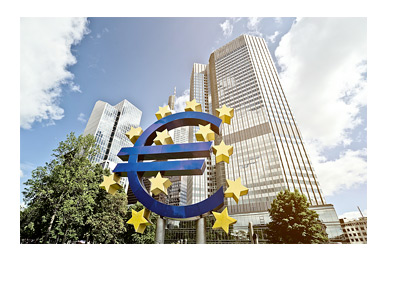
The program, which "is designed to fulfil the price stability mandate", will see the European Central Bank purchase 60 billion EUR/month worth of "bonds issued by euro area central governments, agencies and European institutions" until "at least" September of 2016.
The general idea of QE is to keep interest rates low so that, in theory, businesses and people borrow more money. This, in turn, will lead to increased spending and job creation that should result in a stronger economy.
These recently announced moves were enacted in order to counter the onset of deflation, which has shown signs of appearing in the eurozone in recent months. By introducing a 60 billion EUR/month bond buying program, the European Union is hoping to maintain inflation of close to 2%.
-
Other nations, including the United States, the United Kingdom and Japan, have engaged in QE in recent years, to varying degrees of success.
With the United States seemingly back on track after a roughly 5-6 year stretch, many people are pointing to America as the example for how to properly conduct a quantitative easing campaign.
One of the major downsides to increasing your money supply, of course, is that it will significantly weaker your currency. The Euro recently hit an 11-year low against the US dollar and will almost certainly continue lower, especially with the United States about to enter into a tightening cycle.
-
Shares rose after the news was released, as equities will look much more appetizing thanks to low interest rates.
Source: BBC.com - ECB Unveils Massive QE Boost For Eurozone
Keep reading
Economy and Politics · Oct 28, 2026The 2026 Early Vote Is Running Ahead of 2022. Who Does That Help?Economy and Politics · Oct 26, 2026Can Social Security Be Fixed? The Options and the PollsEconomy and Politics · Oct 25, 2026The Midterm Economy: How the US Is Really Doing Before the 2026 VoteEconomy and Politics · Oct 24, 2026Where the Money Went: Fiscal 2026 in Ten Charts
Filed under Economy and Politics. Every article, by year