
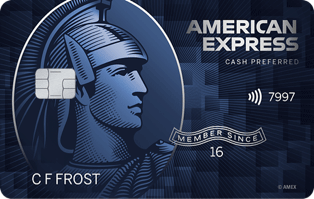
Amex Blue Cash Preferred Review: When a 6% Grocery Card Is Worth $95 a Year
Best for households that spend a lot at U.S. supermarkets and on streaming. The 6% stops at $6,000 a year, which limits how far it can pull ahead of a flat 2% card.
01Who It Suits
Blue Cash Preferred is built for the family grocery bill: 6% at U.S. supermarkets on up to $6,000 a year, 6% on select U.S. streaming subscriptions, and 3% at U.S. gas stations and on transit, from rideshares to parking and tolls. Everything else earns 1%.
The $95 fee (waived in the first year) is what makes the decision interesting. Against Blue Cash Everyday, counting groceries alone, it pays for itself at about $3,167 a year of supermarket spending; Everyday's 3% on online shopping can push that well higher. Against a flat 2% card it is harder: the most the supermarket category can add is $240 a year over 2%, so the card needs streaming, gas and transit, or a lighter load on everything else, to come out ahead.
02Rewards and Costs
| Rewards | 6% at U.S. supermarkets on up to $6,000 a year, then 1%; 6% on select U.S. streaming subscriptions; 3% at U.S. gas stations; 3% on transit (taxis and rideshare, parking, tolls, trains, buses); 1% on everything else, as Reward Dollars |
| What counts | Supermarkets exclude superstores such as Walmart and Target and warehouse clubs such as Costco and Sam's Club; streaming subscriptions must be billed directly by the provider |
| Welcome offer | Varies by person; American Express says you may not be eligible. NerdWallet lists it as high as $300 after $3,000 in purchases in the first 6 months |
| Annual fee | $0 in the first year, then $95 |
| Intro APR | 0% for 12 months on purchases and balance transfers |
| Ongoing APR | 19.74% to 28.74% variable, depending on your credit |
| Balance transfers | Must be requested within 60 days of opening; fee of $5 or 3% of each transfer, whichever is greater |
| Purchases abroad | 2.7% foreign transaction fee |
| Disney credit | Up to $10 a month ($120 a year) back on a Disney+, Hulu or ESPN subscription paid with the enrolled card |
| Redeeming | Reward Dollars as a statement credit, a deposit to an American Express High Yield Savings Account, or at Amazon checkout |
Rewards, the cap, the fee, the Disney credit, the 60-day balance transfer window, the foreign fee and redemption are from American Express's product page, checked November 8, 2026. Its page did not show the welcome offer, APRs or balance transfer fee; those, the supermarket exclusions and the direct-billing rule for streaming are from NerdWallet's review of the card. Offers and rates can change; the issuer's page has the current terms.
03On Your Spending
Other categories, purchases abroad and credits
| Card, on the same spending | Normal year | Compared with Blue Cash Preferred |
|---|
These figures assume you pay the full statement balance every month; interest and other borrowing costs are not included. The categories are the same as in the full comparison, so the same budget gives each card the same result on every page. Purchases abroad are treated as spending outside the bonus categories, and bookings through card issuers' own travel and entertainment sites are not included. Rank all six cards on every category.
What it takes to beat it
Against Blue Cash Everyday, counting groceries alone, Preferred pays more after its first year once you spend about $264 a month at U.S. supermarkets; online shopping raises that line and streaming, gas and transit lower it. Against Capital One Savor, the cap matters: above about $10,250 a year of U.S. supermarket spending (about $854 a month), counting groceries alone, Savor's uncapped 3% pays more. Against a flat 2% card, counting groceries alone: with $1,500 a month of total spending you need about $458 a month at U.S. supermarkets; at $2,000 a month or more, groceries alone cannot do it because the 6% stops at $6,000 a year, so streaming, gas and transit have to make up the rest.
04What the Headline Leaves Out
- The 6% on supermarkets stops at $6,000 a year; after that, groceries earn 1%.
- Restaurants and everything outside the bonus categories earn 1%, half a flat 2% card's rate.
- The $95 fee starts in the second year, so the first year flatters the card.
- Walmart, Target, Costco and Sam's Club do not count as supermarkets.
- The welcome offer is not the same for everyone, and American Express may decline to offer one at all.
- Purchases abroad cost 2.7%.
05Closest Alternatives
| Card | Why you might pick it instead |
|---|---|
| Amex Blue Cash Everyday | No annual fee and 3% at U.S. supermarkets, gas stations and online retail; better below about $264 a month of supermarket spending, or with a lot of online shopping |
| Wells Fargo Active Cash | A flat 2% on everything with no fee; better when your spending is spread widely |
| Capital One Savor | 3% at grocery stores and restaurants with no cap, no annual fee and no fee abroad; pays more than Preferred on very large grocery bills |
All six cards are ranked on your own spending on the cash-back cards page.
06Questions
Is the Blue Cash Preferred worth the $95 annual fee?
Against Blue Cash Everyday, counting groceries alone, yes once you spend about $3,167 a year (about $264 a month) at U.S. supermarkets; heavy online shopping, where Everyday pays 3%, raises that. Against a flat 2% card it needs more, because the 6% stops at $6,000 a year and everything else earns 1%. The calculator above runs it on your figures.
Which streaming services earn 6%?
Select U.S. streaming subscriptions billed directly by the provider. NerdWallet's list, current as of May 2026, includes Netflix, Disney+, Hulu, HBO Max, Peacock, Spotify, Apple Music and YouTube TV.
Does Costco or Walmart count as a supermarket?
No. Warehouse clubs and superstores are excluded from the 6% supermarket category.
What is the Blue Cash Preferred welcome offer?
American Express shows different offers to different people, and some applicants get none. NerdWallet lists it as high as $300 after $3,000 in purchases in the first 6 months. Check the offer you are shown before you apply.
Is there an annual fee in the first year?
No. The fee is $0 for the first year, then $95 a year.
07Sources and Changes
- American Express, Blue Cash Preferred card page, checked November 8, 2026 (rewards, cap, annual fee, Disney credit, balance transfer window, foreign fee, redemption).
- NerdWallet, American Express Blue Cash Preferred review, June 25, 2026 (welcome offer, intro and ongoing APR, balance transfer fee, supermarket exclusions, streaming list).
November 8, 2026: first published. Revised the same day: calculators now take every spending category from the full comparison, and comparisons and break-even figures state what they assume.
Cite This Page
This page is free to cite and link. Its figures come from Card issuers' own product pages and pricing terms (Wells Fargo, Citi, Capital One, American Express, Chase), with any figure an issuer page did not show taken from a named secondary review and are kept current, so please include the date you accessed it.
| Format | Citation | Copy |
|---|---|---|
| Plain | Dave Manuel, “Amex Blue Cash Preferred Review: When a 6% Grocery Card Is Worth $95 a Year,” DaveManuel.com, https://www.davemanuel.com/money/us/credit-cards/amex-blue-cash-preferred/ (accessed November 8, 2026). | Copy |
| APA | Manuel, D. (2026). Amex Blue Cash Preferred Review: When a 6% Grocery Card Is Worth $95 a Year. DaveManuel.com. Retrieved November 8, 2026, from https://www.davemanuel.com/money/us/credit-cards/amex-blue-cash-preferred/ | Copy |
| Chicago | Manuel, Dave. “Amex Blue Cash Preferred Review: When a 6% Grocery Card Is Worth $95 a Year.” DaveManuel.com. Accessed November 8, 2026. https://www.davemanuel.com/money/us/credit-cards/amex-blue-cash-preferred/. | Copy |
| Wikipedia | {{cite web |url=https://www.davemanuel.com/money/us/credit-cards/amex-blue-cash-preferred/ |title=Amex Blue Cash Preferred Review: When a 6% Grocery Card Is Worth $95 a Year |last=Manuel |first=Dave |website=DaveManuel.com |access-date=2026-11-08}} | Copy |
| Link (HTML) | <a href="https://www.davemanuel.com/money/us/credit-cards/amex-blue-cash-preferred/">Amex Blue Cash Preferred Review: When a 6% Grocery Card Is Worth $95 a Year (DaveManuel.com)</a> | Copy |
Source data: Card issuers' own product pages and pricing terms (Wells Fargo, Citi, Capital One, American Express, Chase), with any figure an issuer page did not show taken from a named secondary review. Updates: As terms change. How we build our data pages.