The Average American Pays 49.5 Cents per Gallon in Gasoline Taxes
 With the average cost of a gallon of gasoline currently sitting at $3.933 in the United States, people are naturally more curious as to why gas prices are so high.
 The main factor in the cost of gasoline is the price of crude oil. Gasoline is derived from crude oil, so the higher the price of oil, the more you will be paying to fill up your car. Oil has spiked in price over the past number of months (for a variety of different reasons, including unrest in the Middle East and North Africa, speculation, etc), which is why the price of a gallon of regular gasoline in the United States has risen from $2.75 to $3.93 over the past six months or so.
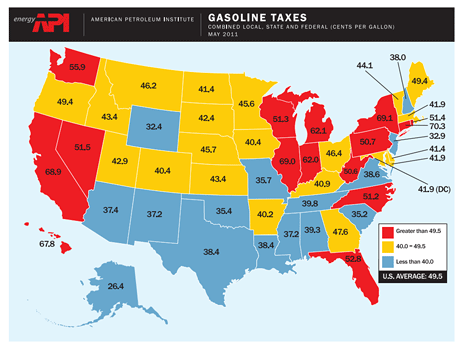
Another key component of gas prices in the United States - gasoline taxes. Gasoline taxes vary greatly from state to state - for instance, Californians pay 68.9 cents per gallon in gasoline taxes, while people living in Texas pay just 38.4 cents per gallon.
Let's break this down:
To start, there is a federal excise tax on gasoline of 18.4 cents per gallon and 24.4 cents per gallon on diesel fuel.
On top of this, you also have state excise taxes, which vary greatly from state to state. The average state excise tax is 20.6 cents per gallon (on gasoline). The West pays the highest amount of state excise taxes on average (32.0 cents per gallon), while the Mid Atlantic region pays the least (12.6 cents per gallon).
On top of state excise taxes, you also have to pay a wide variety of other state taxes and fees that include:
Sales Taxes, Gross Receipts Taxes, Oil Inspection Fees, County and Local Taxes, Underground Storage Tank Fees and other Miscellaneous Environmental Fees.
The average American will pay 10.5 cents per gallon for these assorted taxes. This 10.5 cents per gallon is on top of the 18.4 cents per gallon federal excise tax and average state excise tax of 20.6 cents per gallon.
So, the average American driver will pay 49.5 cents per gallon in taxes (more if they are driving a vehicle that uses diesel fuel). Here is how we arrive at this number:
18.4 Cents (Federal Tax)
20.6 Cents (State Excise Tax)
10.5 Cents (Other State Taxes)
= 49.5 Cents in Total Taxes
So, if you are filling up your average mid-sized car and have no gas in your tank, then you are going to be paying roughly $7.92 in taxes.
If you are wondering why people in Europe pay so much more to fill up their tanks, look no further than taxes. Next time you complain about the amount of gas taxes that you pay in the United States, look at countries like the UK and Germany, and you will feel better almost instantly.
Source: API.org - Motor Fuel Taxes
Filed under: General Knowledge