When Grave Robbers Targeted a U.S. President
 It sounds like fiction. But it isn't.
In 1876, a group of counterfeiters tried to steal Abraham Lincoln's body from his tomb in Springfield, Illinois.
The goal? Ransom.
At the time, the Secret Service had just been created - not to protect the president, but to stop counterfeit currency. The agency was brand new. And one of its first big cases had nothing to do with fake bills. It had to do with a dead president.
The plan was hatched by a man named James "Big Jim" Kennally. He ran a counterfeiting ring out of Chicago. One of his top engravers had been arrested and sentenced to prison. Kennally wanted him out.
To make that happen, Kennally needed leverage. So he and his crew decided to steal Lincoln's body and demand $200,000 and a full pardon for the engraver in exchange.
The gang was sloppy.
They picked the night of November 7, 1876 - coinciding with the presidential election between Rutherford B. Hayes and Samuel Tilden. The idea was that the distraction of the election would make it easier to get in and out unnoticed.
They were wrong.
Two Secret Service agents, working undercover, had infiltrated the plot. The grave robbers didn't know they were being watched.
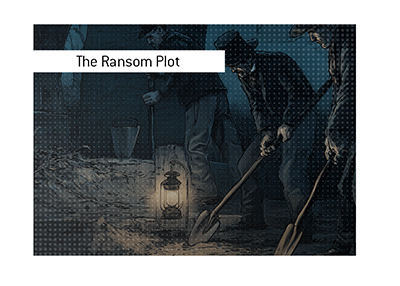
On the night of the heist, they broke into Lincoln's tomb. They sawed through the padlock and opened the sarcophagus. They tried to lift the 500-pound cedar coffin.
Then, the agents moved in.
The robbers dropped everything and fled into the night.
Eventually, they were caught. But under Illinois law, grave robbing wasn't considered a felony - it was only a misdemeanor. The conspirators served just one year in prison.
After the attempt, Lincoln's body was secretly moved to a hidden grave in the tomb. Later, it was buried in a steel cage, surrounded by concrete, ten feet underground.
They weren't taking any more chances.
For years, few people knew where Lincoln's body actually was. Not even his own family.
It took a wild, failed ransom plot to convince the U.S. government to take presidential remains more seriously.
And it became one of the strangest footnotes in American history - where counterfeiting and grave robbing intersected with presidential legacy.
Filed under: General Knowledge