
Elon Musk
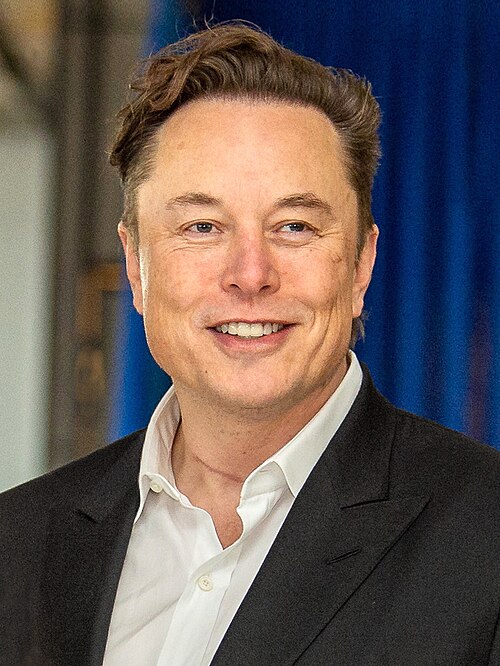
01Overview
Elon Musk is worth an estimated $1,014.9 billion, or about $1.01 trillion, almost all of it in two stocks: SpaceX (Nasdaq: SPCX), which he controls and which also owns xAI and X, and Tesla. He became the world's first trillionaire on June 12, 2026, the day SpaceX listed on the Nasdaq after the largest IPO in history.
Our estimate values SpaceX at $146.03 a share and Tesla at $354.72, both October 16, 2026 closes, and includes the 286.4 million restricted Tesla shares Musk received when he exercised his 2018 options: they are issued to him, carry his votes and have no performance condition left, and he would forfeit them only if he left Tesla before January 19, 2028. Without them the estimate is $913.3 billion, the low end of our range. SpaceX and Tesla make up roughly 98% of the total. We found no reliable figure for his cash, so none is counted. Tesla's proxy shows 207.5 million of his Tesla shares pledged against personal debt3; the amount borrowed is not disclosed, so we subtract no debt. Because SpaceX now trades daily, the figure moves with SPCX and TSLA: a 10% move in both stocks shifts it by roughly $100 billion, and he has crossed the $1 trillion line in both directions several times since June.
Forbes Real-Time shows $908.5 billion (October 18, 2026). Forbes says it leaves out the restricted Tesla shares4, which accounts for most of the gap. The Bloomberg Billionaires Index had him at $1.04 trillion on October 5, 2026, its latest figure we could confirm.
| Age | 55 |
| Born | June 28, 1971 |
| Residence | Austin, Texas |
| Source of wealth | SpaceX, Tesla |
| Largest holding | SpaceX (Nasdaq: SPCX) |
02Reconcile the Estimate
Every holding in our $1,014.9 billion figure and where its number comes from. The SpaceX and Tesla share counts are from SEC filings and are valued at the October 16, 2026 closes; the private-company stakes are our estimates. No debt is subtracted, because no loan balance has been disclosed. We include the 286,428,773 restricted Tesla shares because they are issued to him, carry his votes and have no performance condition left; he would forfeit them only if he left Tesla before January 19, 2028; the low end of our range is the figure without them.
| Counted | Basis | Value |
|---|---|---|
| SpaceX vested sharesMarket price | Schedule 13G filed August 13, 2026 (holdings at June 30, 2026)1: 849,494,440 Class A + 3,916,980,790 Class B = 4,766,475,230 shares held by trusts of which he is trustee, x $146.03 | $696.0B |
| SpaceX vested optionsMarket price | Same 13G1: 350,000,000 options at intrinsic value, x ($146.03 - $8.3998 strike) | $48.2B |
| Tesla shares, Elon Musk Revocable TrustMarket price | Tesla proxy filed October 19, 2026 (holdings at September 30, 2026)2: 413,152,109 shares x $354.72 | $146.6B |
| Tesla restricted shares, 2018 awardMarket price | Same proxy2: 286,428,773 shares issued on exercise June 16, 2026, vesting January 19, 2028, x $354.72 | $101.6B |
| The Boring CompanyEstimated | About 75% (not publicly confirmed) x $23B valuation of its September 2026 raise | $17.3B |
| NeuralinkEstimated | About 52% (not publicly confirmed) x $9.65B, June 2025 Series E | $5.0B |
| Personal assetsModeled | Real estate (about $35M) and aircraft (about $248M) | $0.3B |
| Estimated net worth | $1,014.9B | |
| Left out | Why | Value |
|---|---|---|
| SpaceX performance shares | 1,302,072,285 restricted Class B shares that vest only on milestones including a Mars colony and space data centers (13G1), at $146.03 | $190.1B |
| Tesla 2025 CEO award | 423,743,904 restricted shares; the proxy says he "does not have dispositive or voting control" over them2, at $354.72 | $150.3B |
| X acquisition debt | About $13B, owed by SpaceX's subsidiaries rather than by Musk; it is reflected in the SpaceX share price | In SpaceX equity |
Prices: SPCX $146.03 and TSLA $354.72, October 16, 2026 closes. SpaceX holdings at June 30, 2026 and Tesla holdings at September 30, 2026, the latest filed; EDGAR shows no later Musk filing that changes them. No discount for the SpaceX lockup, which runs to about June 12, 2027.
Not observable: Personal debt. Tesla's 2026 proxy says 207,498,721 of his Tesla shares (about $73.6 billion at $354.72) are pledged as collateral for personal indebtedness3, but the loan balance is not disclosed, so nothing is subtracted. Also not observable: his cash, his exact Neuralink and Boring Company stakes, and any tax he would owe on selling shares or exercising options.
What if the stock price changes?
SpaceX leg: 4,766,475,230 vested shares plus 350,000,000 vested options, which gain one for one with the price above their $8.3998 strike; the options' $2.9 billion total strike cost is netted in everything else, with The Boring Company ($17.3B), Neuralink ($5.0B) and personal assets ($0.3B). Tesla leg: 699,580,882 shares, including the 286,428,773 restricted shares.
03Wealth History
Forbes: Apr 4, 2023 $180B; Apr 2, 2024 $195B; Apr 1, 2025 $342B; Mar 10, 2026 $839B; Oct 18, 2026 $908.5B. DaveManuel.com: Oct 19, 2026 $1,014.9B.
Forbes: World's Billionaires lists published April 4, 2023, April 2, 2024, April 1, 2025 and March 10, 2026; the last point is its real-time figure of October 18, 2026, not a list; as published; not inflation-adjusted. DaveManuel.com: this page's estimate.
04Published Estimates
| Source | Date | Estimate |
|---|---|---|
| DaveManuel.com | October 2026 | $1,014.9B (range $913.3B-$1.01T) |
| Forbes Real-Time | October 18, 2026 | $908.5B |
| Bloomberg Billionaires Index | October 5, 2026 | $1.04T |
Our number is about $106 billion above Forbes. Most of the gap is one decision: in June 2026 Musk exercised his 2018 Tesla options and received 286,428,773 restricted shares that do not vest until January 19, 2028. We count those shares (worth $101.6B at the October 16 close) because they are issued to him, carry his votes and have no performance condition left; he would forfeit them only if he left Tesla before January 19, 2028; Forbes says it leaves them out4. Excluding them, our estimate would be about $913B, within about $5 billion of Forbes. Forbes' June 24, 2026 article values his SpaceX shares and vested options4; neither tracker publishes its other line items, so the rest of the gap cannot be traced. One likely reason is the value each gives the private Neuralink and Boring Company stakes; another is that Forbes' figure uses October 17-18 prices and ours the October 16 closes.
05Asset Breakdown
Musk's wealth is held almost entirely in equity positions in public and private companies; we count no cash because none is disclosed. SpaceX and Tesla shares are marked to market at their October 16, 2026 closing prices ($146.03 and $354.72). The SpaceX line uses the holdings in Musk's Schedule 13G filed August 13, 2026 (positions as of June 30, 2026), counting his vested shares and vested options but not his 1.3 billion unvested performance shares. Together, SpaceX and Tesla make up roughly 98% of the total.
| Asset | Value |
|---|---|
| SpaceX / xAI / X (Nasdaq: SPCX)14,766,475,230 vested Class A and B shares at $146.03 (October 16, 2026 close) = $696.0B, plus 350,000,000 vested options ($8.3998 strike) at intrinsic value = $48.2B. Roughly 36-38% economic stake | $744.2B |
| Tesla, Inc. - direct shares2413,152,109 shares held by the Elon Musk Revocable Trust (~10.5% of 3.95B outstanding) at $354.72/share (October 16, 2026 close) | $146.6B |
| Tesla, Inc. - 2018 award (restricted shares)22018 options exercised June 16, 2026 (net settlement, no open-market sales); 286,428,773 restricted shares (~7.3% of Tesla) vesting January 19, 2028, at $354.72/share. Forbes excludes these4 | $101.6B |
| The Boring Company~75% ownership (estimate, not publicly confirmed; likely diluted by the latest raise) at the $23B valuation from its $3B raise (September 2026) | $17.3B |
| Neuralink~52% stake (estimate, not publicly confirmed) at $9.65B (June 2025 Series E, the last official round). Mid-2026 secondary trades implied $29B-$42B | $5.0B |
| Personal assetsReal estate (~$35M) plus aviation fleet (~$248M) | $0.3B |
| Total assets | $1,014.9B |
| Less: debt3Tesla's 2026 proxy shows 207,498,721 of his Tesla shares pledged as collateral for personal indebtedness. The amount borrowed is not disclosed, so nothing is subtracted | Not disclosed |
| Estimated net worth | $1,014.9B |
Not included above: the unearned 2025 Tesla compensation package (423.7 million shares, about $150.3B at the October 16, 2026 close) and the 1.3 billion unvested SpaceX performance shares (about $190.1B). Both are described in the Contingent Awards table below. The roughly $13B of X acquisition debt sits inside SpaceX's corporate structure and is reflected in the equity value, not counted as a personal liability.
06Current Positions
| Organization | Role |
|---|---|
| Tesla, Inc. | CEO and Product Architect |
| SpaceX | CEO, CTO and ChairParent of xAI and X; Nasdaq: SPCX since June 12, 2026 |
| xAI | FounderSpaceX subsidiary since February 2026 |
| X (formerly Twitter) | OwnerSpaceX subsidiary via xAI |
| Neuralink | Co-founder and ownerBrain-computer interface company |
| The Boring Company | Founder |
07How the Fortune Was Built
| 1971 | Born June 28 in Pretoria, South Africa. | |
| 1995 | Co-founds Zip2, a web software company, with his brother Kimbal. | |
| 1999 | Compaq buys Zip2 for $307 million. Musk reinvests in X.com, which later merges with Confinity to become PayPal. | $22M |
| 2002 | eBay buys PayPal for $1.5 billion. Musk founds SpaceX the same year. | $175.8M |
| 2004 | Leads Tesla Motors' Series A round and becomes chairman of the board. | |
| 2008 | SpaceX's Falcon 1 reaches orbit after three failed launches. Musk becomes Tesla CEO during the financial crisis. | |
| 2025 | xAI acquires X for $33 billion (March). Tesla shareholders approve a new ~$1 trillion pay package (November). Delaware Supreme Court restores his 2018 Tesla package (December 19). | |
| 2026 | SpaceX acquires xAI (February 2). SpaceX files its S-1 (May 20), prices at $135 (June 11) and lists as SPCX (June 12), making Musk the first trillionaire. Exercises his 2018 Tesla options (June 16). | ~$1.1T |
| Oct 2026 | SPCX closes at $146.03 and Tesla at $354.72 on October 16. | $1.01T |
08Profile
| Birthplace | Pretoria, South Africa |
| Citizenship | South Africa, Canada, USA |
| Education | University of Pennsylvania (bachelor's degrees in economics and physics); attended Queen's University |
09The SpaceX IPO
Largest IPO in History
SpaceX filed its S-1 registration statement with the SEC on May 20, 2026, and priced its IPO on June 11, 2026 at $135 per share (about a $1.77 trillion valuation), selling 555.6 million Class A shares to raise $75 billion - about $86 billion after the underwriters exercised their over-allotment option on June 15. It is the largest IPO ever, about three times Saudi Aramco's $25.6 billion record from 2019.
Shares began trading on the Nasdaq as SPCX on June 12, opened at $150 and closed the first day at $160.95 (+19.2%). The stock hit an intraday high of $225.64 on June 16, fell to a record low of $108.37 around the start of August as other holders' lockups began expiring, and closed at $146.03 on October 16, 2026 - a market value of roughly $1.98 trillion. Musk sold no shares in the offering, and his own shares are locked up for 366 days, so the earliest he can sell is around June 12, 2027.
The public company combines the rocket and Starlink business, the xAI artificial intelligence lab (acquired by SpaceX in February 2026), and the X social media platform (acquired by xAI in March 2025) under one ticker. On August 14, 2026 SpaceX also completed its $60 billion acquisition of Cursor, issuing 389.3 million Class A shares, which lifted its share count to about 13.57 billion.
How the IPO Pushed Musk Past $1 Trillion
The arithmetic was straightforward. On June 12, 2026, the day SpaceX began trading, Bloomberg named Musk the world's first trillionaire at about $1.1 trillion, and Forbes reported the same milestone. At the October 16, 2026 close of $146.03, his vested SpaceX shares and options are worth about $744 billion. Add his Tesla holdings (413.2 million direct shares plus 286.4 million restricted shares from the 2018 award, about $248 billion together), his stakes in Neuralink and The Boring Company, and personal assets, and the total comes to about $1.01 trillion - just above the $1 trillion line, which he has crossed in both directions several times since June.
Unusual Features of the Offering
Retail allocation. SpaceX had targeted up to 30% of the offering for retail investors; the final allocation was about 20% (Bloomberg), and every eligible customer at Robinhood, Schwab, Fidelity, SoFi and E*Trade received at least one share.
Voting structure. Musk holds approximately 82.4% of voting power after the offering (per the final prospectus) through Class B shares carrying 10 votes per share. His economic stake is far smaller: his August 13, 2026 Schedule 13G reports beneficial ownership of about 6.42 billion shares (48.4%), but that includes 1.3 billion unvested performance shares; on vested shares and options alone his economic stake is roughly 36-38%. The S-1 also includes a provision that Musk "can only be removed from our board or these positions by the vote of Class B holders" - the same super-voting shares he himself controls.
Anthropic compute contract. The S-1 disclosed a $1.25 billion per month compute services agreement with Anthropic - xAI's direct competitor in frontier AI models - signed May 6, 2026 and running through May 2029, for up to approximately $45 billion in total. Either party can terminate it on 90 days' notice.
Underwriting syndicate. Goldman Sachs led the deal, with Morgan Stanley, BofA Securities, Citigroup and J.P. Morgan as joint book-running managers.
Institutional objections. In a joint letter announced May 14, 2026, NYC Comptroller Mark Levine, NYS Comptroller Thomas DiNapoli and CalPERS CEO Marcie Frost - representing over $1 trillion in pension assets - asked SpaceX to adopt one-share-one-vote or a sunset on its dual-class shares, a majority-independent board, a separate chair and CEO, an end to mandatory arbitration, and independent review of related-party deals. The dual-class structure was retained in the final prospectus.
Our separate feature article "SpaceX Files To Go Public" covers the S-1 in more depth, including the related-party transactions involving Tesla, the Anthropic compute contract, the Cursor acquisition and the Mars colony and space-based data center performance grants.
10Background
Early Life and Education
Born in Pretoria, South Africa, Elon Musk displayed an early aptitude for technology and entrepreneurship. He taught himself computer programming at age 12 and sold his first software - a game called Blastar - for approximately $500. After moving to Canada at age 17, Musk attended Queen's University before transferring to the University of Pennsylvania, where he earned bachelor's degrees in economics and physics.
Early Ventures
Musk's entrepreneurial journey began with Zip2, a web software company he co-founded with his brother Kimbal in 1995. Compaq acquired Zip2 for $307 million in 1999, netting Musk $22 million. He immediately reinvested in X.com, an online financial services company that merged with Confinity to become PayPal. eBay's acquisition of PayPal in 2002 for $1.5 billion provided Musk with $175.8 million, which he used to fund his most ambitious ventures.
SpaceX: Making Life Multi-Planetary
In 2002, Musk founded Space Exploration Technologies (SpaceX) with the goal of reducing space transportation costs and enabling the colonization of Mars. After three failed launches that nearly bankrupted the company, SpaceX successfully launched Falcon 1 in 2008. The company has since changed the aerospace industry with reusable rockets - one Falcon 9 first-stage booster (B1067) has now been launched and recovered 37 times, a record it set in August 2026. SpaceX conducted 165 orbital launches in 2025, all on Falcon 9. The company has won contracts with NASA and the Department of Defense (which the S-1 calls the "Department of War"), and built the Starlink satellite internet constellation into a global broadband network with 10.3 million subscribers at March 31, 2026.
Tesla: Accelerating Sustainable Energy
Musk joined Tesla Motors in 2004, leading the company's Series A funding round and becoming chairman of the board. He assumed the role of CEO in 2008, steering the company through near-bankruptcy during the 2008 financial crisis. Under his leadership, Tesla has grown from a niche electric vehicle manufacturer to one of the world's most valuable automakers, with a market capitalization of approximately $1.40 trillion as of the October 16, 2026 close. Its work in battery technology, autonomous driving and energy storage has reshaped the automotive and energy industries.
Tesla launched unsupervised Robotaxi service in Dallas and Houston in early 2026 and was operating it in 7 metro areas by its Q2 2026 report, including Austin, Dallas, Houston, Miami, Orlando and Tampa. FSD active subscriptions reached 1.48 million in Q2 2026, and Tesla delivered 486,532 vehicles in Q3 2026.
The SpaceX-xAI Mega-Merger
In what became one of the largest mergers in history at the time of announcement, SpaceX acquired Musk's artificial intelligence company xAI on February 2, 2026, creating a combined entity initially valued at $1.25 trillion. The deal, structured as an all-stock transaction, valued SpaceX at $1 trillion and xAI at $250 billion. The merger brought together SpaceX's rocket and Starlink satellite operations, xAI's Grok AI platform and Colossus supercomputer, and the X social media platform (which xAI had previously acquired in March 2025 for $33 billion) under a single corporate umbrella. Musk stated the primary goal was to develop "orbital data centers" - AI compute infrastructure in space.
How Musk Became the First Trillionaire
Elon Musk became the world's first trillionaire on June 12, 2026, the day SpaceX listed on the Nasdaq. Three events between late 2025 and mid-2026 got him there. First, the Delaware Supreme Court's December 19, 2025 ruling reversed the Tornetta decision and restored his 2018 Tesla compensation package; on June 16, 2026 he exercised those 303.96 million options (at about $23.34 a share, net-settled with no open-market sales) and received 286.4 million restricted shares, worth about $102 billion at the October 16, 2026 close. Second, the February 2026 SpaceX-xAI merger consolidated his scattered private-company holdings into a single $1.25 trillion entity. Third, SpaceX priced its IPO on June 11, 2026 at $135 a share (about $1.77 trillion) and began trading the next day under the ticker SPCX.
Bloomberg put his fortune at about $1.1 trillion on listing day and near $1.33 trillion at the June 16 peak. As SPCX fell, Bloomberg's figure dropped below $1 trillion by June 24 and to $684 billion by August 1, before climbing back to $1.04 trillion on October 5, 2026.
On top of those holdings, Tesla shareholders approved a new $1 trillion compensation package in November 2025 that could push his ownership to nearly 29% of Tesla if all milestones are met (none had been earned as of Tesla's 2026 proxy), and the SpaceX board granted him approximately 1.3 billion Class B performance shares in early 2026 contingent on extraordinary milestones including a million-person Mars colony and space-based data centers producing 100 terawatts of compute. None of those contingent grants are reflected in our net worth figure. Not every 2026 headline went his way: on May 18, 2026 a federal jury in Oakland rejected his claims against OpenAI on statute-of-limitations grounds. Musk said he will appeal; the verdict has no direct effect on the figures above.
11Additional Comments
There have been multiple times over the course of his life when Elon could have just taken his money and retired.
Instead, he has continued to challenge himself by starting some of the most complex companies imaginable - a mainstream electric vehicle company (Tesla), a space transportation and satellite Internet company (SpaceX), and a frontier AI lab (xAI).
The running of these companies has taken a tremendous toll on Musk - both Tesla and SpaceX were literally days or weeks away from declaring bankruptcy at various points in the 2000s.
In the end, however, Elon persevered, creating some of the most important and valuable companies in the world. As a result, Elon is the richest person in the world by a huge margin. Bloomberg named him the world's first trillionaire on June 12, 2026, the day SpaceX listed, and his fortune peaked near $1.33 trillion on June 16. As of October 18, 2026, Forbes puts him at $908.5 billion - more than double the next-richest person, Amazon founder Jeff Bezos (about $372 billion on Forbes as of October 5, 2026).
12SpaceX IPO Key Dates and Prices
From the S-1 filing to the latest close used on this page.
| Date | Event | Price / amount |
|---|---|---|
| May 14, 2026 | Pension funds' joint letter on governance | Over $1T in assets |
| May 20, 2026 | S-1 filed with the SEC | |
| June 11, 2026 | IPO priced; 555.6M Class A shares sold (~$1.77T valuation) | $135.00 / $75B raised |
| June 12, 2026 | Nasdaq listing as SPCX; first-day open | $150.00 |
| June 12, 2026 | First-day close (+19.2%) | $160.95 |
| June 15, 2026 | Over-allotment exercised | ~$86B total raised |
| June 16, 2026 | Intraday high | $225.64 |
| Early August 2026 | Record low as other holders' lockups expire | $108.37 |
| August 14, 2026 | Cursor acquisition completed (389.3M Class A shares issued) | $60B |
| October 16, 2026 | Close used on this page (~$1.98T market value) | $146.03 |
| ~June 12, 2027 | Musk's 366-day lockup ends |
13SpaceX 2025 Financial Snapshot
Segment revenue as disclosed in the S-1, with revenue for Q2 2026, SpaceX's first quarter as a public company (reported August 4, 2026).
| Segment | 2025 revenue | Q2 2026 revenue |
|---|---|---|
| Space | $4.09B | $0.96B |
| Connectivity (Starlink) | $11.39B | $4.29B |
| AI (xAI + X) | $3.20B | $2.56B |
| Total (consolidated) | $18.67B | $7.81B |
2025 adjusted EBITDA was about $6.6B and 2025 capital expenditure was $20.74B, with the AI segment alone consuming $12.7B of that. Q2 2026 revenue was up 92% year over year, with a net loss of $541M. Starlink had 4.4 million subscribers at the end of 2024, 8.9 million at the end of 2025 and 10.3 million at March 31, 2026; earnings-call summaries put it near 12 million at June 30, 2026 (not yet confirmed against the quarterly filing).
14Bloomberg's Musk Figure Since the Listing
How the Bloomberg Billionaires Index tracked Musk as SPCX moved.
| Date | Event | Bloomberg figure |
|---|---|---|
| June 12, 2026 | SpaceX lists; named first trillionaire | ~$1.1T |
| June 16, 2026 | Peak | ~$1.33T |
| June 24, 2026 | Falls below $1 trillion | Under $1T |
| August 1, 2026 | Near the SPCX low | $684B |
| October 5, 2026 | Latest confirmed figure | $1.04T |
15Why Our Figure Differs From Forbes
Reconciling our sum-of-the-parts total with Forbes Real-Time.
| Item | Value |
|---|---|
| DaveManuel.com estimate | $1,014.9B |
| Less: 2018-award restricted Tesla shares (Forbes excludes)4 | ($101.6B) |
| Our estimate without the restricted shares | $913.3B |
| Forbes Real-Time (October 18, 2026) | $908.5B |
Forbes' June 24, 2026 article values his SpaceX shares and vested options4. The remaining gap of about $5 billion cannot be traced, because Forbes does not publish its other line items; one likely reason is the value given to the private Neuralink and Boring Company stakes, another the different price dates.
16Contingent Awards Not Counted
Two performance grants that could add hundreds of billions of dollars if earned. Neither is in our $1,014.9B figure because of the extraordinary and uncertain nature of their vesting conditions.
| Award | Terms | Value at Oct 16, 2026 close |
|---|---|---|
| 2025 Tesla compensation package | Approved November 2025 with 75% of votes in favor. 423.7 million restricted shares vesting over 10 years in 12 tranches, tied to market-cap milestones up to $8.5 trillion and operational targets including 20 million vehicle deliveries and 10 million paid FSD subscribers. None of the 12 tranches had been earned as of Tesla's 2026 proxy; the first milestone is a $2 trillion market cap, against roughly $1.40 trillion on October 16, 2026. The proxy says he does not have dispositive or voting control over these shares, and a separate 96 million-share 2025 interim award was forfeited in 2026. | $150.3B |
| SpaceX CEO Award | 1 billion Class B shares granted early 2026. Vests across 15 market-cap tranches from $500 billion to $7.5 trillion AND requires a permanent human colony on Mars of at least one million inhabitants. | $146.0B |
| SpaceX AI CEO Award | 302,072,285 Class B shares granted early 2026. Vests across 12 tranches from $1.065 trillion to $6.565 trillion AND requires non-Earth-based data centers delivering 100 terawatts of compute per year. | $44.1B |
| Total contingent (excluded) | Tesla $150.3B plus SpaceX grants of 1,302,072,285 shares ($190.1B) | $340.4B |
17Frequently Asked Questions
What is Elon Musk's net worth?
Elon Musk's net worth is estimated at about $1.01 trillion ($1,014.9 billion) as of October 2026, based on SpaceX and Tesla closing prices on October 16, 2026. Forbes Real-Time had him at $908.5 billion on October 18, 2026 and Bloomberg at $1.04 trillion on October 5, 2026.
Is Elon Musk a trillionaire?
Yes, on most measures. Bloomberg named him the world's first trillionaire on June 12, 2026, the day SpaceX listed on the Nasdaq, and his fortune peaked near $1.33 trillion on June 16. He has since crossed the $1 trillion line in both directions several times as SpaceX and Tesla shares have moved.
Why is Forbes lower than other estimates?
Forbes says it leaves out the 286.4 million restricted Tesla shares Musk received in June 2026 when he exercised his 2018 options, as it does with other billionaires' unvested restricted stock. They vest on January 19, 2028 and were worth $101.6 billion at the October 16, 2026 close. We count them because they are issued to him, carry his votes and have no performance condition left; he would forfeit them only if he left Tesla before January 19, 2028. Without them our estimate would be about $913 billion, close to Forbes' $908.5 billion.
How much of SpaceX does Elon Musk own?
On vested shares and options, roughly 36-38% of SpaceX, worth about $744.2 billion at the October 16, 2026 close of $146.03. His Schedule 13G reports 48.4% beneficial ownership including 1.3 billion unvested performance shares, and he controls about 82.4% of the vote through 10-vote Class B shares.
Can Elon Musk sell his SpaceX shares?
Not yet. Musk sold no shares in the IPO and his shares are locked up for 366 days, so the earliest he can sell is around June 12, 2027.
Does Elon Musk have debt?
Some, but the amount is not public. Tesla's 2026 proxy says 207,498,721 of his Tesla shares, worth about $73.6 billion at the October 16, 2026 close, are pledged as collateral for personal indebtedness. It does not say how much he has borrowed, so we subtract no debt from our estimate.
18Sources and Method
This is a sum-of-the-parts estimate: each holding is valued separately and added up. SpaceX: 4,766,475,230 vested Class A and B shares and 350,000,000 vested options from Musk's Schedule 13G filed August 13, 20261, at the October 16, 2026 close of $146.03, with the options at intrinsic value. Tesla: 413,152,109 shares in his revocable trust and 286,428,773 restricted shares from his 2018 award, from Tesla's proxy filed October 19, 20262, at the October 16 close of $354.72. Neuralink and The Boring Company are valued at their last reported funding rounds times our estimates of his stakes. Unearned performance awards at both companies are left out. No debt is subtracted: Tesla discloses that 207,498,721 of his shares are pledged as loan collateral3 but not how much he has borrowed. The range runs from $913.3 billion, without the 286,428,773 restricted Tesla shares, to our full count of $1,014.9 billion.
- Tesla: valued at the October 16, 2026 close of $354.72 - 413,152,109 shares held by his revocable trust plus the 286,428,773 restricted shares received on June 16, 2026 when Musk exercised his 2018 options (restored by the Delaware Supreme Court on December 19, 2025). The restricted shares vest on January 19, 2028; we include them at full market value with no discount. Share counts and the 207,498,721 pledged shares are from Tesla's 2026 proxy statement (filed October 19, 2026). Forbes says it excludes the restricted shares (Forbes, June 24, 2026), which accounts for most of the gap between its figure and ours.
- SpaceX: SpaceX/xAI/X valued at the October 16, 2026 Nasdaq close of $146.03 (SPCX). Holdings are taken from Musk's Schedule 13G filed August 13, 2026: 4,766,475,230 vested Class A and Class B shares held in trusts, plus 350 million fully vested options valued at intrinsic value (market price minus the $8.3998 strike; they expire February 11, 2031). No liquidity discount is applied for the lockup, which runs to about June 12, 2027.
- Private holdings: Neuralink valued at $9.65B (June 2025 Series E, its last official priced round); secondary trades in mid-2026 implied $29B-$42B but are not used. The Boring Company valued at $23B (September 2026 raise of $3B). Musk's stakes in both (~52% and ~75%) are estimates that have not been publicly confirmed.
- Liabilities: none subtracted. Tesla's proxy shows 207,498,721 Tesla shares pledged as collateral for personal indebtedness, but no loan balance has been disclosed or credibly reported. We do not subtract tax on shares he has not sold or options he has not exercised. The ~$13B in X acquisition debt sits within SpaceX's corporate structure and is accounted for in the equity valuation, not as a personal liability.
- Excluded: the unearned 2025 Tesla compensation package (423.7 million shares) and the 1.3 billion unvested SpaceX performance shares (contingent on Mars colonization and space-based data center construction).
- Wealth history: Forbes World's Billionaires lists of 2023 (Forbes Australia; No. 2, $180 billion, valued March 10, 2023), 2024 (Daily Tribune), 2025 (The Edge Malaysia) and 2026 (Scripps News via Denver7).
- Sensitivity: SpaceX and Tesla together make up roughly 98% of the total, so a 10% move in both stocks shifts the headline figure by roughly $100 billion. Private company valuations are particularly subject to change with market conditions and new funding rounds.
1 Vested shares (849,494,440 Class A and 3,916,980,790 Class B, held by trusts of which he is trustee) and 350,000,000 vested options, per Musk's Schedule 13G filed August 13, 2026 (holdings at June 30, 2026); excludes 1,302,072,285 restricted Class B performance shares.
2 413,152,109 shares held by the Elon Musk Revocable Trust and 286,428,773 restricted shares from the 2018 award (exercised June 16, 2026; vesting January 19, 2028), per Tesla's 2026 proxy statement, filed October 19, 2026 (holdings at September 30, 2026). Excludes the 423,743,904 restricted shares of the 2025 CEO award.
3 Tesla's 2026 proxy statement: Musk's holding "includes 207,498,721 shares pledged as collateral to secure certain personal indebtedness." The loan balance is not disclosed, so no debt is subtracted.
4 Forbes, "Elon Musk is no longer a trillionaire", June 24, 2026: "Forbes has removed the $116 billion of restricted Tesla stock" from its calculation, to match how it treats other billionaires' unvested restricted stock.
Last updated: October 19, 2026. Net worth figures are estimates built from public filings and reporting; private holdings are valued conservatively and may differ from what the person would report.
Cite This Page
This page is free to cite and link. Please include the date you accessed it.
| Format | Citation | Copy |
|---|---|---|
| Plain | Dave Manuel, “Elon Musk Net Worth,” DaveManuel.com, updated October 19, 2026, https://www.davemanuel.com/net-worths/elon-musk/ (accessed October 26, 2026). | Copy |
| APA | Manuel, D. (2026). Elon Musk Net Worth. DaveManuel.com. Retrieved October 26, 2026, from https://www.davemanuel.com/net-worths/elon-musk/ | Copy |
| Chicago | Manuel, Dave. “Elon Musk Net Worth.” DaveManuel.com. Accessed October 26, 2026. https://www.davemanuel.com/net-worths/elon-musk/. | Copy |
| Wikipedia | {{cite web |url=https://www.davemanuel.com/net-worths/elon-musk/ |title=Elon Musk Net Worth |last=Manuel |first=Dave |website=DaveManuel.com |access-date=2026-10-26}} | Copy |
| Link (HTML) | <a href="https://www.davemanuel.com/net-worths/elon-musk/">Elon Musk Net Worth (DaveManuel.com)</a> | Copy |
Page last updated October 19, 2026. How we build our data pages.