
Labor Statistics Commissioner Ethelbert Stewart Was Too Honest for Hoover
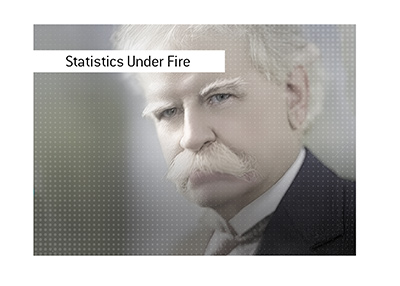 Ethelbert Stewart led the Bureau of Labor Statistics from 1921 to 1932. He survived four presidents. He built the Bureau into a respected source on labor conditions.
By 1930, the Great Depression had struck. Public claims about employment numbers were politically charged. Stewart pushed back. He argued the official narrative misrepresented reality.
His insistence on data integrity made him a target. President Hoover's administration was eager for optimism. Stewart refused to let the Bureau rubber-stamp it. He resisted pressure to skew unemployment data.
The result: a forced "retirement." Officially, Stewart stepped down in 1932 as scheduled. But insiders say the real ouster came in 1930. It was not voluntary. It followed months of internal confrontation.
Stewart did not fall quietly. Colleagues whispered his firing came because he challenged Hoover's false claims. They claim he was removed to silence labor statistics.
Stewart's tenure had seen major expansions: monthly employment and payroll series, deeper wage and industrial safety studies, coverage of multiple industries. He had defended the Bureau's independence through budget cuts and reform battles.
Stewart and Hoover clashed first over cost-of-living statistics. As early as the mid-1920s, Commerce Secretary Herbert Hoover - later president - pushed to transfer BLS cost-of-living work into the Census Bureau. Stewart resisted. He feared politicization and loss of BLS independence. Contracts were cut and the Bureau was forced to reduce publication frequency, but Stewart stood firm.
The showdown intensified in January 1930. Hoover asked Stewart to produce an experimental weekly employment index. The President used it to claim that employment was improving. Stewart insisted the data was too limited and prone to seasonal bias. He refused to endorse Hoover's optimistic spin. Other officials pointed out that the usual monthly BLS figures showed flat or declining employment. Hoover refused to acknowledge that difference.
But political expediency won. When Stewart refused to join the spin, his position became untenable. Though he remained nominal commissioner until mid-1932, real power left him much earlier.
His departure marked a turning point. The Bureau lost its most candid critic of economic spin. Employment data became less independent. Labor truth had been sidelined.
Stewart's final years were quiet. He died in 1936. His legacy? A cautionary tale: truth in statistics meets political pressure at its peril.
Filed under: General Knowledge