The $75 Million Gamble That Saved Harley-Davidson
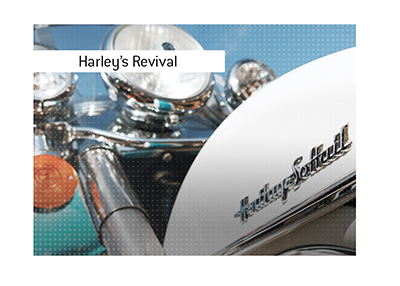 In the 1970s, Harley-Davidson was on the ropes. The company, once synonymous with American motorcycles, had been acquired by American Machine and Foundry (AMF) in 1969. AMF saw Harley as a brand with strong name recognition, but they treated it like a mass-production project. The focus shifted from craftsmanship to volume.
The results were disastrous. AMF ramped up production from about 15,000 bikes annually in the mid-1960s to nearly 70,000 by the mid-1970s. Quality didn't keep up. Complaints about defective parts skyrocketed. Oil leaks, poor welds, weak electrical systems, and unsteady handling dogged the bikes. Warranty claims soared. Riders coined the term "Hardly-Abelsons." A company built on loyalty and mystique suddenly had a reputation for junk.
Meanwhile, competition from Japan was relentless. Honda's U.S. sales exploded, topping 100,000 units annually by the early 1970s. Yamaha, Kawasaki, and Suzuki followed with their own affordable, reliable, low-maintenance machines. By 1975, Japanese manufacturers controlled more than three-quarters of the American motorcycle market. Harley's domestic market share plunged from around 75% in the 1960s to under 20% by the early 1980s.
The financials told the same story. By 1980, Harley was losing money, bleeding share, and sitting on excess inventory dealers couldn't move. The AMF strategy of chasing volume left the brand hollowed out. In 1981, AMF was ready to cut its losses and walk away.
That's when 13 Harley executives, led by Vaughn Beals and Willie G. Davidson, orchestrated a $75 million leveraged buyout to take the company private. It was a risky move - Harley was saddled with debt, competing against global giants, and dealing with a shredded reputation. The new leadership bet everything on two ideas: better quality and stronger identity.
Production was slowed to restore craftsmanship. New methods like just-in-time manufacturing cut waste and tightened standards. Harley introduced models like the FXST Softail in 1984 that resonated with riders. Just as importantly, Harley leaned into its heritage. They sold freedom, rebellion, and Americana. Japanese bikes were reliable, but Harley owned the culture.
The turnaround worked. In 1983, Harley persuaded the U.S. government to impose a temporary tariff on imported motorcycles over 700cc to give breathing room. But the company didn't hide behind protectionism - it used the reprieve to rebuild its lineup and reputation. By 1987, Harley voluntarily asked for the tariffs to be lifted, signaling they could compete on their own.
By the end of the 1980s, Harley was back on top of the heavyweight motorcycle segment, commanding close to 60% of the market. In 1989, Harley's sales hit $673 million, up from just $289 million in 1982. Net income surged from a loss of $15 million in 1982 to a profit of nearly $30 million by 1989. The stock, which traded under $5 at the time of the buyout, climbed into double digits by the end of the decade.
The "Hardly-Abelsons" era could have been the end of Harley-Davidson. Instead, it became a story of resurrection. From near bankruptcy, the company reestablished itself as one of America's most iconic brands - not because it built the most reliable machines, but because it built the ones people wanted to be seen on.
Filed under: General Knowledge