Why Canada's New Sovereign Wealth Fund Looks Different From Every Other Major Fund
 On April 27, 2026, Prime Minister Mark Carney announced the Canada Strong Fund, Canada's first national sovereign wealth fund, with an initial capitalization of $25 billion. The catch? Canada is running a $65 billion federal deficit, and the entire fund is being financed by federal borrowing. We mapped every major sovereign wealth fund in the world to find out whether anyone else does this. Spoiler - basically nobody. Here is the full breakdown of who owns what, where the money came from, and why Canada's path is unusual.
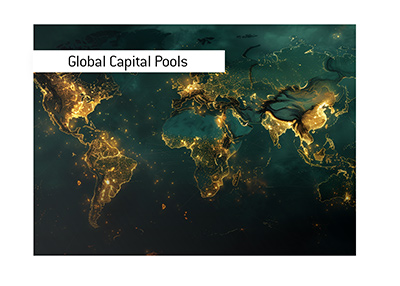
 The world's sovereign wealth funds collectively manage more than $13 trillion in assets, span 60+ countries, and quietly own pieces of almost everything you've ever heard of, from Apple and Microsoft to Newcastle United, Heathrow Airport, the Empire State Building, Paris Saint-Germain, and Harrods. Canada just decided to join the club. Here is the complete map of who owns what, where the money came from, and why Canada's path is genuinely unusual.
The Headline Numbers
Global SWF Assets
$13.4T
Up from $4T in 2008
Funds Tracked
100+
Across 60+ countries
Largest Fund
$2.20T
Norway GPFG
Canada Strong Fund
$25B
Announced April 27, 2026
The vast majority were funded by one of three things: oil and gas revenues, mineral wealth, or accumulated foreign-exchange reserves from trade surpluses. A small handful were seeded with privatization proceeds or pension contributions. Almost none of the major SWFs in history were funded by the issuance of government debt.
This is what makes Canada's announcement worth a closer look.
The Top 25 Sovereign Wealth Funds, Ranked
Below is the complete ranking of the largest sovereign wealth funds in the world by assets under management, current as of April 2026. The "Source" column shows what originally funded each fund, and the "Borrows?" column tells you whether the fund issues debt at the fund level (a separate question from whether the country itself runs deficits).| # | Fund | Country | AUM (USD) | Founded | Source | Borrows? |
|---|---|---|---|---|---|---|
| 1 | Government Pension Fund Global (GPFG) | Norway | $2.20T | 1990 | Oil & Gas | No |
| 2 | SAFE Investment Company | China | $1.69T | 1997 | FX Reserves | No |
| 3 | China Investment Corporation | China | $1.33T | 2007 | FX Reserves | Sparingly |
| 4 | Public Investment Fund (PIF) | Saudi Arabia | $1.15T | 1971 | Oil & Gas + Debt | Yes |
| 5 | Abu Dhabi Investment Authority (ADIA) | UAE | $1.05T | 1976 | Oil & Gas | No |
| 6 | Kuwait Investment Authority | Kuwait | $1.03T | 1953 | Oil & Gas | No |
| 7 | GIC Private Limited | Singapore | $847B | 1981 | FX Reserves | No |
| 8 | Indonesia Investment Authority / Danantara | Indonesia | $600-900B | 2021 | Mineral + State Assets | Some |
| 9 | HKMA Investment Portfolio | Hong Kong | $576B | 1993 | FX Reserves | No |
| 10 | Qatar Investment Authority (QIA) | Qatar | $557B | 2005 | Oil & Gas | No |
| 11 | National Council for Social Security Fund | China | $450B | 2000 | Pension Contributions | No |
| 12 | Mubadala Investment Company | UAE | $330B | 2002 | Oil & Gas + Debt | Yes |
| 13 | Temasek Holdings | Singapore | $324B | 1974 | Privatization Proceeds | Sparingly |
| 14 | Turkey Wealth Fund | Turkey | $360B | 2016 | State Asset Transfers | Yes |
| 15 | ADQ (Abu Dhabi Developmental Holding) | UAE | $251B | 2018 | State Assets + Debt | Yes |
| 16 | Korea Investment Corporation | South Korea | $181B | 2005 | FX Reserves | No |
| 17 | Russian National Wealth Fund | Russia | $174B | 2008 | Oil & Gas | No |
| 18 | National Development Fund of Iran | Iran | $157B | 2011 | Oil & Gas | No |
| 19 | Samruk-Kazyna | Kazakhstan | $155B | 2008 | Oil & Gas + State Assets | Some |
| 20 | Khazanah Nasional Berhad | Malaysia | $119B | 1993 | State Asset Transfers | Some |
| 21 | Future Fund | Australia | $163B | 2006 | Budget Surpluses + Privatization | No |
| 22 | State Oil Fund of Azerbaijan (SOFAZ) | Azerbaijan | $75B | 1999 | Oil & Gas | No |
| 23 | Brunei Investment Agency | Brunei | $73B | 1983 | Oil & Gas | No |
| 24 | Alaska Permanent Fund | United States (state) | $80B | 1976 | Oil Royalties | No |
| 25 | Oman Investment Authority | Oman | $53B | 2020 | Oil & Gas | No |
| NEW | Canada Strong Fund | Canada | $18B (USD) | 2026 | Federal Borrowing | Yes (100%) |
Dave's Note
The "Borrows?" column refers specifically to whether the fund itself raises debt at the fund level (issuing bonds, taking out loans, or being capitalized with borrowed money). This is NOT the same question as whether the underlying country runs a budget deficit. Saudi Arabia runs deficits AND its PIF issues bonds. Norway runs surpluses AND its fund holds zero debt. China runs deficits but its CIC borrows only sparingly. The Canada Strong Fund, however, is the only major fund on this list whose entire initial capitalization comes from federal government borrowing rather than from accumulated surplus, resource revenues, or FX reserves.Top 15 Sovereign Wealth Funds by AUM (USD Trillions/Billions)
How Sovereign Wealth Funds Get Funded
Cracking open the funding mechanisms of the world's SWFs reveals five distinct models, with sharp regional patterns.1. Oil and Gas Revenues
The original, dominant, and most successful SWF model. A government taxes (or directly owns) the production of hydrocarbons, takes a slice of the revenue off the top, and parks it in a fund. The Norwegian model is the gold standard: Norway taxes its North Sea oil and gas heavily, transfers the proceeds into the Government Pension Fund Global, and is forbidden by law from spending more than 3% of the fund's value in any given year. The result is a fund worth $2.2 trillion (end of 2025), larger than the GDP of Spain, with no debt and no political controversy.Oil-funded SWFs include: Norway GPFG, Abu Dhabi Investment Authority, Kuwait Investment Authority, Qatar Investment Authority, Saudi PIF, Russian National Wealth Fund, Iran NDFI, Brunei Investment Agency, Azerbaijan SOFAZ, Oman Investment Authority, Libya LIA, Trinidad and Tobago Heritage Fund, Timor-Leste Petroleum Fund, Angola FSDEA, Ghana Petroleum Funds, Nigeria NSIA, and Alaska Permanent Fund (Alaska's $80B oil-royalty fund pays a dividend to every state resident every year).
2. Foreign Exchange Reserves
The Asian model. A country runs persistent trade surpluses, accumulates massive FX reserves (typically held in US Treasuries), and decides those reserves should be earning equity-like returns instead of bond-like returns. The country sets up an investment vehicle, transfers reserves to it, and the fund manages those reserves more aggressively than a central bank ever would.FX-reserve-funded SWFs include: China SAFE Investment Company, China Investment Corporation, Singapore GIC, Hong Kong Monetary Authority Investment Portfolio, Korea Investment Corporation, and (partially) the National Council for Social Security Fund of China.
3. Mineral or Resource Wealth (Non-Hydrocarbon)
The diamond and copper model. Botswana's Pula Fund is funded by diamond royalties. Chile's Economic and Social Stabilization Fund draws on copper revenues. Indonesia's Danantara incorporates state mineral assets. Mongolia's Future Heritage Fund is built on coal and copper. Kiribati's tiny but venerable Revenue Equalization Reserve Fund (1956) was originally funded by phosphate exports, which ran out years ago, leaving the fund as the country's only meaningful national asset.4. Privatization, State Asset Transfers, and Pension Contributions
The Singapore Temasek model. When a country privatizes state-owned enterprises, the proceeds need a home. Singapore's Temasek was created in 1974 to hold the government's shares in Singapore Airlines, DBS Bank, Singtel, and dozens of other former state enterprises. The fund then reinvests dividends. Turkey's Wealth Fund, Malaysia's Khazanah, and the UAE's ADQ all started this way.5. Borrowing, Or "We're Going to Have a Sovereign Wealth Fund Even Though We Don't Actually Have a Surplus"
This is where Canada lives. And it is genuinely a small club.The Borrowing Question: Who Else Funds Their Sovereign Wealth Fund With Debt?
This is the question that prompted this whole article. So we are going to answer it directly.Among the world's 25 largest sovereign wealth funds, exactly five issue debt at the fund level. None of them use debt as the primary capital source. All of them are backed by an underlying country with substantial accumulated wealth, FX reserves, or oil revenues.
| Fund | Country | Primary Capital Source | Debt Issuance | Why They Borrow |
|---|---|---|---|---|
| Saudi PIF | Saudi Arabia | Oil revenues + Aramco share transfers | $17B+ public & private | Vision 2030 mega-projects (NEOM, Qiddiya) need front-loaded capital before oil revenues catch up |
| Mubadala | UAE | Oil revenues + state asset transfers | ~$15B in bond issuance | Match maturity profiles to long-term infrastructure investments |
| ADQ | UAE | State asset transfers | ~$8B in bond issuance | Strategic flexibility, not capital need |
| Turkey TVF | Turkey | State asset transfers | Eurobond issuance | Plug capital gaps in domestic strategic projects |
| Indonesia Danantara | Indonesia | State assets + minerals | Bond program (announced) | Aggressive expansion of strategic state holdings |
| Canada Strong Fund | Canada | Federal government borrowing | $25B initial capitalization | Country has no surplus; entire fund is borrowed money |
The Critical Distinction
The five existing SWFs that borrow ALL have one thing in common: they sit on top of an underlying base of accumulated commodity wealth, FX reserves, or state assets that are generating substantial returns. Saudi PIF holds $1.15 trillion in real assets, plus stakes in Aramco. They borrow because doing so is cheaper than liquidating equity and matches the maturity of mega-projects. Mubadala has decades of oil revenue underneath its bond issuance. ADQ has the consolidated state holdings of Abu Dhabi.The Canada Strong Fund's initial $25 billion CAD capitalization is being added directly to federal borrowing in a year when Canada is already running a $65 billion deficit. There is no underlying pool of accumulated surplus to borrow against. The fund will be capitalized by issuing more federal debt, with the hope that fund returns over time will exceed federal borrowing costs (currently around 3.3% on 10-year Government of Canada bonds). If the fund earns its target returns, this works. If it does not, Canada has simply added $25 billion to the federal debt without any corresponding asset growth.
Norway: The Gold Standard Model
Before we get to the most fascinating holdings of the world's SWFs, it is worth pausing on Norway because the Government Pension Fund Global represents what almost everyone agrees is the cleanest, most successful sovereign wealth fund design in history.| Metric | Value |
|---|---|
| Total assets under management | $2.20 trillion |
| 2025 annual return | $247 billion (largest in fund history) |
| Companies invested in | 7,200+ across 60 countries |
| Approximate share of all global publicly-listed equity | ~1.5% |
| Largest single equity holding | Nvidia (1.3% of company) |
| Other top holdings | Apple (1.2%), Microsoft (1.3%), Amazon, Alphabet, JPMorgan |
| US-listed equity allocation | ~40% of fund |
| Fixed income allocation | ~26% (~$594B) |
| Outstanding debt at fund level | $0 |
| Annual spending rule | Maximum 3% of fund value |
The Most Fascinating Holdings of the World's Sovereign Wealth Funds
This is the part of the story that most people find genuinely surprising. SWFs do not just buy bonds and broad-market index funds. They own trophy real estate, sports teams, luxury brands, airports, infrastructure, and entire major Western businesses. Here is a tour of the most interesting ones.Qatar Investment Authority (QIA) | $557 Billion
QIA's portfolio reads like a list of British and European trophy assets. Approximately one-third domestic, one-fifth in the US, and the rest spread across Europe and Asia.HarrodsAcquired 2010 for ~£1.5B; iconic Knightsbridge department store
Paris Saint-Germain FCOwned via Qatar Sports Investments since 2011
Heathrow Airport (20%)Largest minority shareholder
The Shard, LondonWestern Europe's tallest building
HSBC Tower & Canary WharfMajor London financial district stakes
Empire State Realty Trust (9.9%)Owns the Empire State Building
Sainsbury's (14.3%)Major UK supermarket
Barclays (~6.4%)Largest single shareholder
London Stock Exchange (~7%)Strategic financial infrastructure stake
Volkswagen (17%)Significant European auto exposure
IAG / British Airways (25%)Via Qatar Airways
The Savoy Hotel, Claridge's, The BerkeleyLondon luxury hotel portfolio
Saudi Public Investment Fund (PIF) | $1.15 Trillion
PIF is the world's most aggressive SWF, deploying $36.2 billion in 2025 alone. About 80% of its assets are within Saudi Arabia (mostly Vision 2030 mega-projects), with 20% allocated globally.Electronic Arts (announced Sept 2025)$55B total deal; PIF leads consortium with Silver Lake and Affinity Partners; ~94% majority
LIV GolfDisrupted the PGA Tour; merger talks ongoing
Newcastle United FC (85%)PIF stake increased from 80% in 2024; acquired 2021
Lucid Motors (~60%)EV manufacturer; PIF is the controlling shareholder
NEOM ($500B+ project)The Line, Trojena, Sindalah, Oxagon
Uber (~5%)Early stake from 2016
Saudi Aramco (~16%)Transferred from state in 2022 and 2023
Live Nation, EA, Activision Blizzard stakesEntertainment / gaming push
SoftBank Vision Fund (45% of $100B)Anchor LP since 2016
Heathrow Airport (15.01%)Acquired Dec 2024 alongside Ardian
Norway Government Pension Fund Global (GPFG) | $2.20 Trillion
The world's most diversified equity portfolio. Owns approximately 1.5% of every publicly-listed stock on earth.Nvidia (1.3%)Largest single equity holding by value
Apple (1.2%)Tech megacap exposure
Microsoft (1.3%)Tech megacap exposure
Amazon (~1.2%)Top 5 holding
Alphabet (~1.2%)Top 5 holding
7,200+ companies in 60 countriesMaximum diversification mandate
Real estate in 14 citiesOffice and retail focus, including London, NYC, Tokyo
Renewable energy infrastructureNewer but growing allocation
Singapore Temasek Holdings | $324 Billion
Holds the government's stakes in Singapore's most strategic enterprises, plus aggressive global investments in tech and financial services.Singapore Airlines (~55%)National flag carrier
DBS Bank (~28%)Southeast Asia's largest bank
Singtel (~52%)Major regional telecom
Standard Chartered (16%)Major UK-listed emerging markets bank
Alibaba, Tencent, BYD stakesChinese tech exposure
PayPal, Stripe, Visa stakesFintech focus
Abu Dhabi Investment Authority (ADIA) | $1.05 Trillion
Notoriously secretive. Almost no public disclosure of holdings, but known to have significant positions in real estate, hedge funds, and private equity globally.Citigroup (~5%)Acquired during 2007-08 financial crisis
Major real estate in NYC, LondonTrophy commercial properties
Hedge fund allocationsOne of the world's largest LP investors
Gatwick Airport (~16%)Via consortium
Kuwait Investment Authority | $1.03 Trillion
The oldest SWF in the world. Diversified across global equity and real estate.BP (~5%)Long-term strategic stake
Daimler/Mercedes-Benz (~7%)One of the largest shareholders
BMWSignificant minority stake
Major US Treasury holdingsReserve management
China Investment Corporation (CIC) | $1.33 Trillion
Aggressive global infrastructure and real estate plays.Heathrow Airport (10%)Joint with QIA on the world's busiest international airport
Logicor (European logistics)$13.8B acquisition from Blackstone in 2017
Major UK port and infrastructure stakesIncluding Thames Water and others
Morgan Stanley (~9%)Crisis-era investment
"Sovereign wealth funds are typically created when governments have budgetary surpluses and have little or no international debt. It is not always possible or desirable to hold this excess liquidity as money or to channel it into immediate consumption." - Sovereign Wealth Fund Institute, on the standard SWF formation criteria
The Canada Strong Fund: What We Know So Far
Carney's announcement on April 27, 2026 was light on operational detail. Here is what has been confirmed publicly through the spring economic update tabled April 28 and subsequent statements.| Detail | Confirmed |
|---|---|
| Initial capitalization | $25 billion CAD (~$18 billion USD) |
| Funding source | Federal government (i.e., added to the deficit) |
| Investment mandate | Co-invest with private sector in "nation-building" projects |
| Citizen access | Canadians may purchase fund units, similar to government bonds |
| Transition office | Canada Strong Fund transition office to be established |
| Sectors targeted | Major infrastructure, defense, energy transition, AI, critical minerals |
| Operational launch | To be determined; details "going forward" |
| Independence framework | Not yet finalized |
The Verdict
The world's sovereign wealth funds collectively are one of the most consequential pools of capital in the global financial system. They were largely built on resource revenues, accumulated trade surpluses, and the kind of long-term institutional discipline that lets a country put money away for fifty years and not touch it. The handful of funds that issue debt do so as one tool among many, sitting on top of substantial accumulated wealth.Canada's path is genuinely unusual. The country is creating a national investment vehicle without the prerequisite surplus that normally drives SWF creation, in a year when the federal deficit is more than double the size of the fund itself, and at a moment when interest rates on federal debt sit at levels that will make any underperformance painful. Whether this works will depend almost entirely on three factors: whether the Carney government keeps the fund's investment decisions genuinely insulated from political direction (the Norway model), whether the fund earns returns above the federal cost of borrowing over a 10-20 year horizon, and whether successor governments resist the temptation to raid it for short-term spending.
The historical track record on all three of those questions is mixed at best. Norway nailed it. Russia, Iran, and Venezuela emphatically did not. Canada is now in the experiment. The next decade will tell us which direction it leans.
For now, the Canada Strong Fund joins the global SWF club as an unusual entrant: a fund built not on what the country has saved, but on what it has borrowed, with the hope that the math eventually works out. We will be watching.
Filed under: General Knowledge